RPG documents: give your players something to discover
Letters, photos and reports turn information into discoveries. Explore the benefits of RPG documents with real examples from the Mini Kraken editor.
The GM says someone left a letter. The players ask who wrote it, whether the envelope has been opened and why the signature looks familiar. Before they read a single line, the object has already created a scene.
RPG documents are materials that exist inside the story and reach the players: correspondence, a news article, a photograph or a field report. Also called handouts, they give the adventure's information a form the group can reread, compare and discuss.
The Mini Kraken RPG document library has templates you can adapt to your campaign. Start with the question that makes each one useful: what can the characters discover from it?
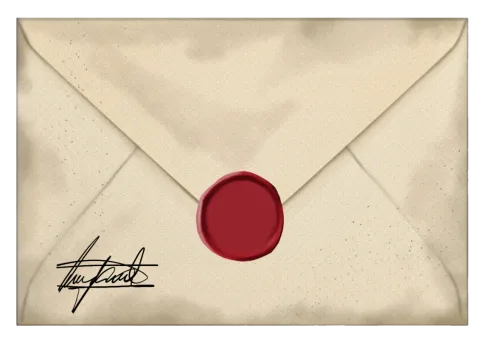
Actual preview of the Letter template. The envelope, seal and signature suggest an origin before anyone reads the message. You will need to prepare the message for your adventure.
Give the world its own voices
An institution writes differently from a frightened person. A report lists incidents. A letter avoids mentioning a name. A newspaper describes an attack the characters witnessed as an accident.
This supports immersion because the information has an author within the setting. Players consider what that person knew, what they concealed and whom they were addressing. The source becomes part of the investigation.
Try presenting the same disappearance in two documents: a news article says the search has ended, while a recent note asks someone to keep a window open. The mystery emerges from their relationship.
Keep information available after the scene
Names, dates and addresses are easy to lose in a long conversation. A document lets the group revisit a detail when it becomes relevant, even in a later session.
This can reduce interruptions to repeat information and give players more independence. While one person talks to a witness, another checks the time recorded in a report. Players who prefer to think before speaking have something concrete to examine.
The evidence needs to remain usable: readable text, a recognizable filename and a transcript when handwriting or visual details carry important information.
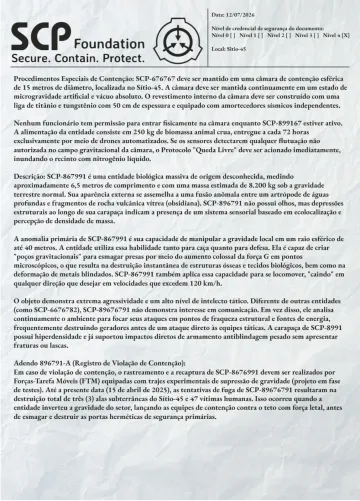
The Foundation Report provides an institutional presentation. Adapt its contents so that the case number, observations and named personnel matter to your story.
Let players compare accounts
A useful document supports a choice. Finding a credential might lead the group to look for its owner, enter a building or investigate the organization. Each option moves the session in a different direction.
Avoid putting the entire solution in tiny lettering. Essential information should be perceptible and understandable. A subtle detail can instead offer an extra advantage: recognizing an ally, anticipating an ambush or finding a safer route.
A document can also be wrong within the fiction. Give players ways to question it through a conflicting date, a witness or a photograph. Their suspicion then has evidence behind it.
Reuse a structure when preparing future sessions
Once you establish an organization's appearance, keep its header, colors and signature in future documents. Repetition creates recognition: players see the symbol and remember an earlier case.
Text and images can occupy separate layers in the editor. You can change a session's news without rebuilding its entire presentation. Before reusing a document, check for old names, incompatible dates and unrelated images.
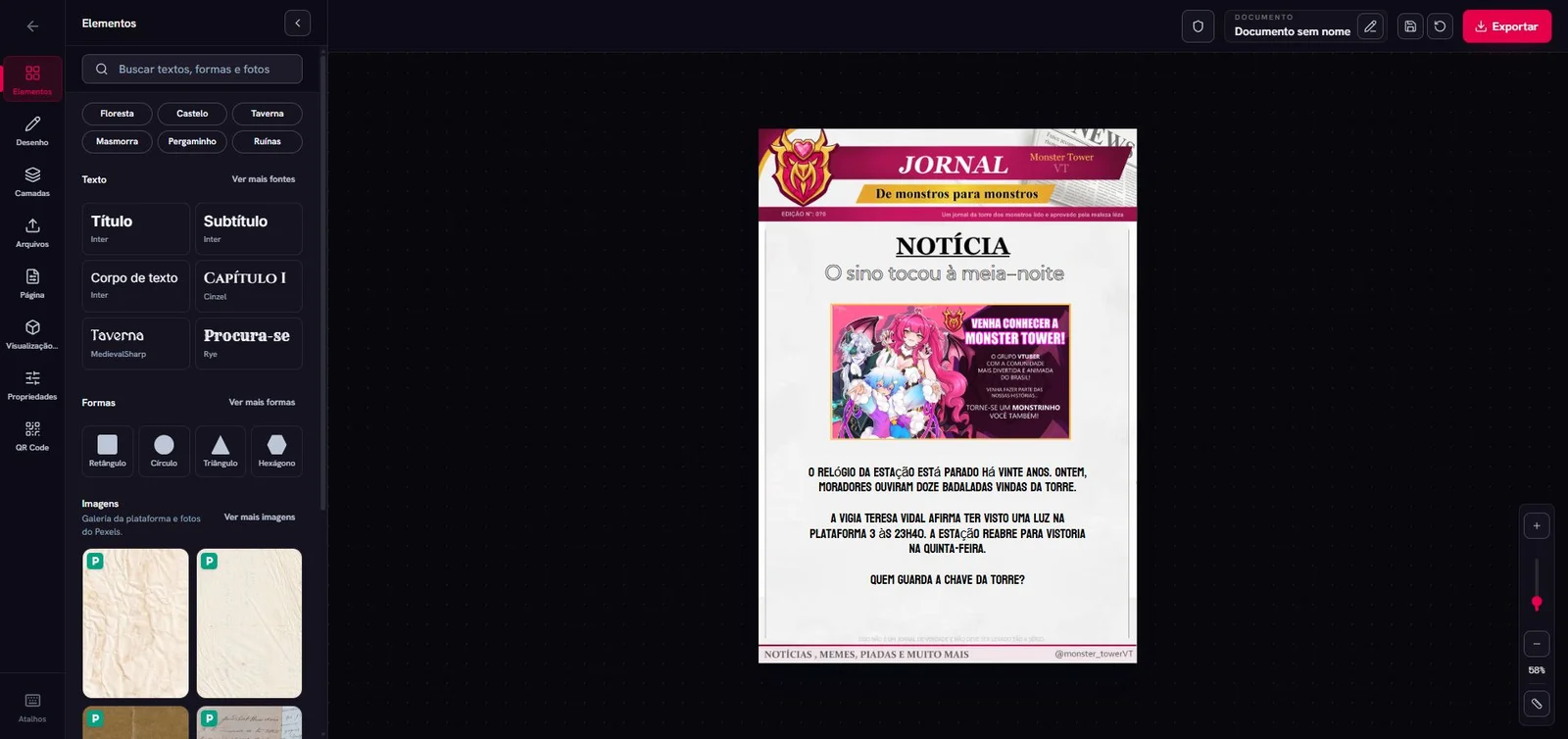
The Jornal da Torre template open in the editor, with a headline and body adapted for this article. The template's original visual identity and illustration remain in place. The interface and sample text are in Portuguese.
Start with one document and one decision
For your next session, choose a revelation the group would normally hear from the GM. Turn it into a short letter, a news item or a record. Include a person, a place and a reason to act.
For example: “Watchkeeper Teresa Vidal saw a light on platform 3 at 11:40 p.m. The station reopens for inspection on Thursday.” The group now has someone to interview, somewhere to explore and a deadline to consider.
Choose a format in the document library and follow the illustrated editor walkthrough. To connect several pieces of evidence, continue with immersive investigation documents.