RPG handouts: how to turn documents into playable clues
Make RPG handouts with clear clues, adaptable document examples and a practical workflow for designing, checking and sharing your first player handout.
An RPG handout is something players receive as part of the fiction: a letter, newspaper clipping, annotated photograph, map or diary page. It gives the group a lasting reference they can inspect, compare and act on without remembering every detail of a spoken description.
Start with the RPG handout maker and templates on Mini Kraken. Before choosing a paper background, write the information the document needs to communicate. Presentation establishes atmosphere; a readable clue gives players a next step.
Choose a format around the players' decision
- Letter: someone asks a favor, tells a lie or changes allegiance. Give them a recipient and a reason to write.
- Newspaper: an event becomes public knowledge. A date, location and witness provide leads.
- Diary: someone records an incomplete understanding. A change between entries can reveal what happened.
- Report: an institution tries to organize facts. Timelines, recovered objects and inconsistencies suggest investigations.
- Map or photograph: a visual detail helps identify a place or object. Provide a text description of essential visual information as well.
Avoid preparing five documents that repeat the same revelation. Let each one add information, challenge a theory or introduce a choice.
How to make an RPG handout in six steps
1. Write the consequence first
Finish this sentence: “After reading this, the players can…”. They might visit a warehouse before midnight or notice that a witness changed the meeting time. If there is no clear answer, a spoken description may be enough.
2. Separate the clue from the atmosphere
Write the clue in a plain sentence, then add two details of voice or setting. A smuggler's note might say that the shipment reaches pier three. An abbreviated signature and a complaint about the rain establish its character.
3. Give the object a believable origin
Who wrote it? Who was supposed to read it? Why was it kept? A personal letter and a work order should sound different. A witness should not automatically know the villain's entire plan.
4. Build the document in the editor
Open the handout editor or choose a library template. Arrange the background, text and images in layers. Leave margins and keep names, numbers and addresses away from stains and decorative edges.
5. Check it at the delivery size
Zoom out, open the image on a phone or make a test print. If an essential word becomes hard to read, enlarge the type or reduce the texture. A plain transcript helps players who use screen readers or struggle with handwriting fonts.
6. Plan discovery and later access
Decide where the document appears, who receives it and what the file will be called. Use “caretaker-letter” instead of “proof-the-mayor-is-guilty”. Keep GM notes separate from the image delivered to players.
An example note to adapt
Iara, I left the key in the caretaker's toolbox. The warehouse closes at eleven, but the shipment for pier three won't arrive until after midnight. If anyone asks, you came for the lanterns. — N.
What the characters learn: there is an accessible key and an after-hours delivery. What they can do: find the caretaker, watch the pier or enter the warehouse. What remains unknown: who N. is and what the shipment contains.
Replace the names and locations to suit your campaign. In fantasy, the shipment might arrive on an alchemists' barge. In horror, it could contain objects from an excavation. The structure of the clue works in both settings.
Common questions
Does a handout have to be an image?
No. A text message, printed sheet or accessible description can serve the same purpose. Choose a format your group can consult during play.
Can I reuse a template across game systems?
Yes. Fictional letters and documents can work in D&D, Call of Cthulhu, Ordem Paranormal or a homebrew game. Adjust the period, vocabulary and institutions to your setting.
Should I hide the clue in a cipher?
Only when solving it is part of the fun your group agreed to. Give essential information another route into play if the puzzle stalls. An optional cipher can provide an advantage without blocking the entire adventure.
Continue with Call of Cthulhu handouts, a fictional newspaper with playable leads or letters and diaries to adapt.
Try editable documents
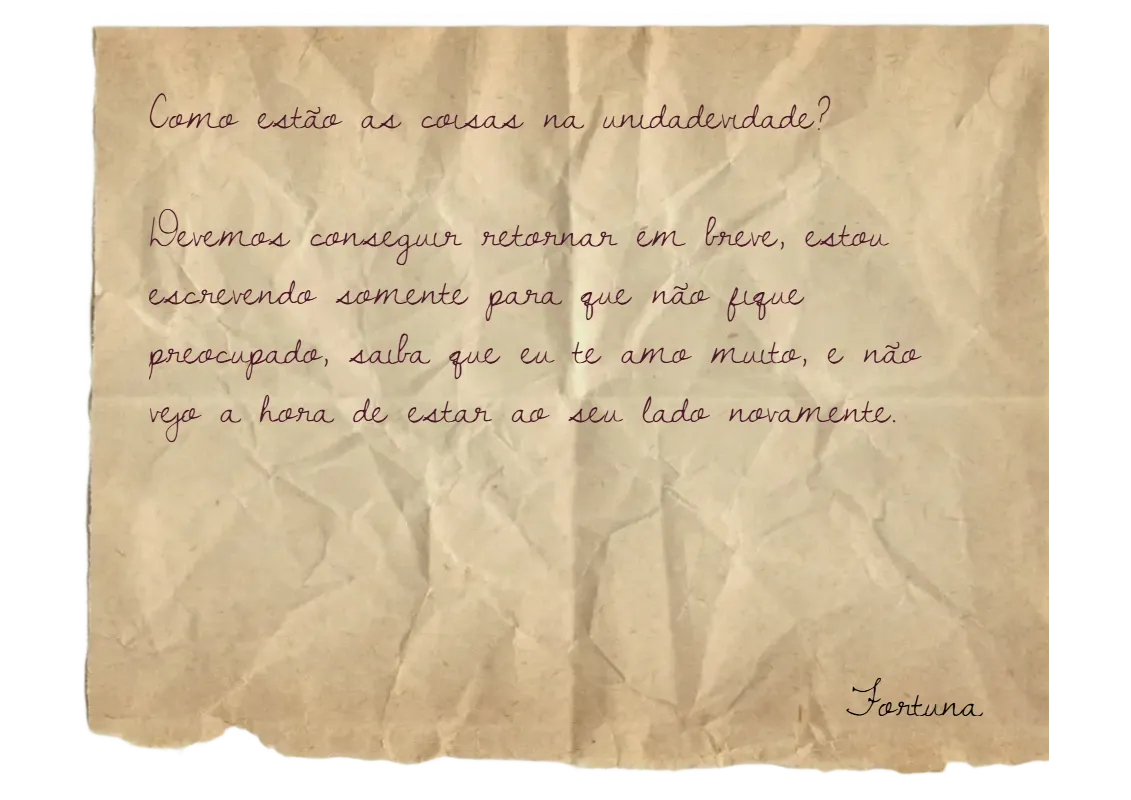
Choose a format in the template collection or open Bilhete. The image above previews the existing catalog template. Check its access conditions before editing.