RPG newspaper handouts: write a clipping with playable clues
Build a fictional RPG newspaper with a headline, date, witnesses and usable clues. Includes an original clipping, layout steps and printing advice.
An RPG newspaper handout makes an event part of your campaign's public world. A report can introduce a missing person, announce a discovery or show how a town understands something the characters witnessed. To work at the table, it needs information the group can act on.
Start with a single clipping. A full page needs more writing and can bury the clue among stories without consequences. Try a layout in the handout maker, using a template or assembling the document in the editor.
What belongs in a fictional newspaper?
Publication name and date: locate the document in the campaign. Headline: identifies the event. Opening paragraph: explains what happened, where and when. Named source: gives the group someone to find. Unresolved detail: leaves room to investigate.
Do not turn the report into a secret adventure summary. The reporter knows statements and observable facts but might misunderstand the cause. Distinguish a witness's claim from the newspaper's own conclusion.
Example: a station that should be empty
SANTA BRUMA COURIER — June 9, 1931 Residents hear whistle at abandoned station Three residents of Railway Street say they heard a train at the old station on Monday night at approximately 11:40 p.m. No service has used the branch since the quarry closed eight years ago. Dressmaker Teresa Vidal says she found a new ticket under her door the next morning. “It has my father's name. He never lived at this address.” The council announced that watchman Ernesto Paiva will inspect the station this Thursday at 6 p.m. Anyone with information can find him at the municipal depot on Clock Square.
This original clipping can be adapted to your table. It offers three actions: speak to Teresa, find Ernesto or visit during the inspection. The name on the ticket creates mystery without replacing those actions with guesswork.
GM note: decide who wrote the ticket and why they know Teresa's father. Keep that answer off the player handout. For a mundane lead before the supernatural reveal, the inspection might uncover fresh truck tracks.
How to lay out a newspaper handout
- Choose the final size. A half-page clipping often needs less preparation than a complete newspaper.
- Put the publication name at the top, followed by the date and edition. Keep these details readable.
- Use a short headline and contrasting body text. Avoid decorative fonts for paragraphs.
- Use one column for phones; two may work on a larger printed sheet. Check the final reading size before deciding.
- Add a photograph or small advertisement only when it contributes to the setting or investigation.
- Apply texture sparingly, then export an image to inspect outside the editor.
The G2 news website template offers a different presentation for contemporary campaigns. It represents a digital news page. For an old newspaper, compose a clipping with period-appropriate text and background.
Give secondary stories a purpose
A job advertisement can provide access to the investigation site. A rain forecast can explain empty streets. A planned power outage can contradict a report of a brightly lit window. If a secondary story has no consequence, keep it brief so it does not compete with the main information.
Print or deliver online
Make a test print at actual size before preparing multiple copies. Check whether the background uses excessive ink and whether the printer cuts the edges. On a phone, make sure players can zoom without losing their place between columns.
Provide a transcript as well. It preserves information for players with visual difficulties and makes later reference easier. Use a filename such as “station-newspaper” without revealing the case's solution.
Connect the report to other objects with the Cthulhu investigation handouts and letter and diary examples. The RPG handout guide explains how to choose the format of each clue.
Try editable documents
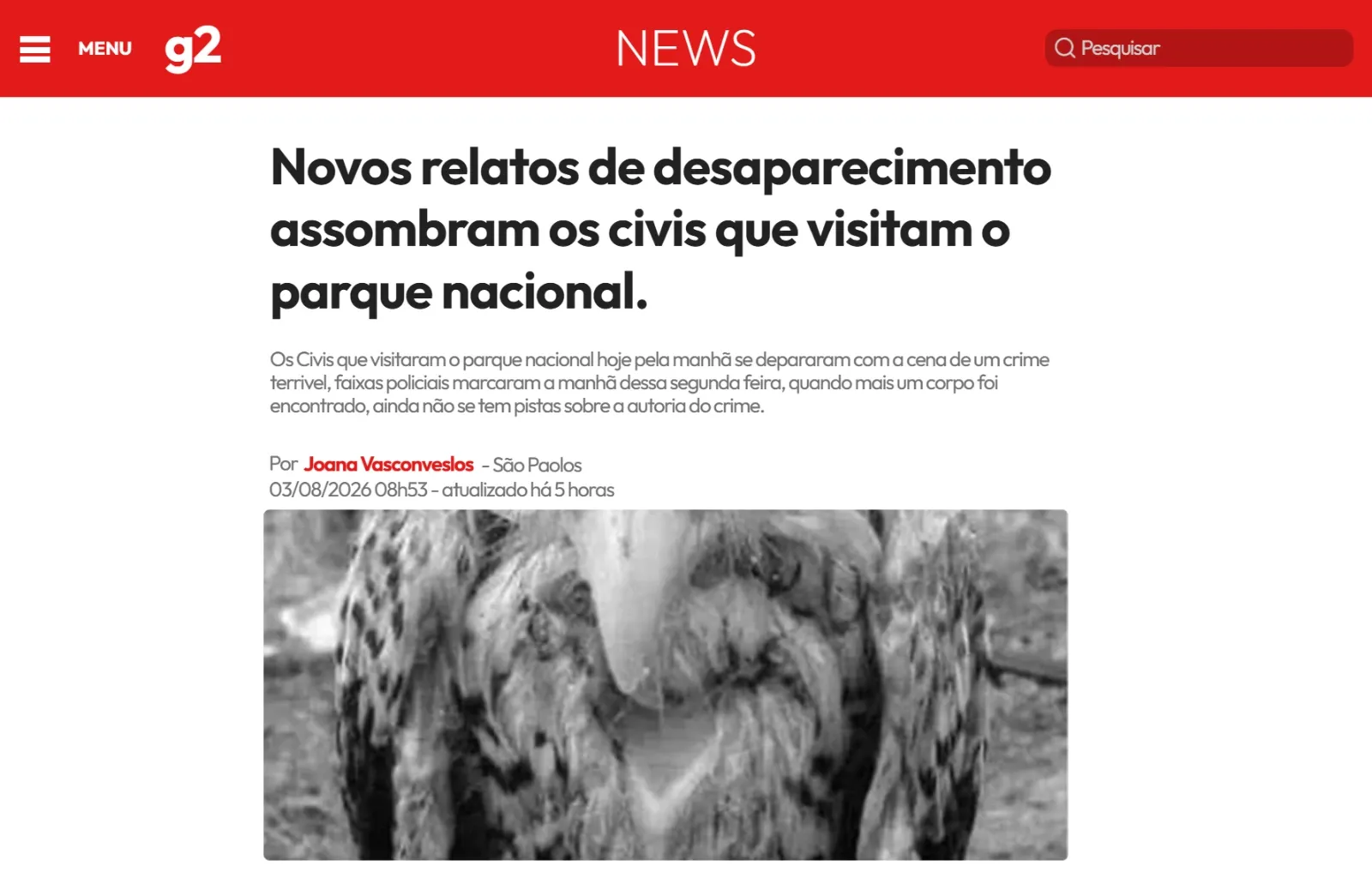
Choose a format in the template collection or open G2 Site de Notícias. The image above previews the existing catalog template. Check its access conditions before editing.