
How to prepare an SCP report for your tabletop RPG
Prepare an SCP report with an observation, a procedure and a clue players can check. Adapt ERPG’s existing Foundation report and review it before your session.
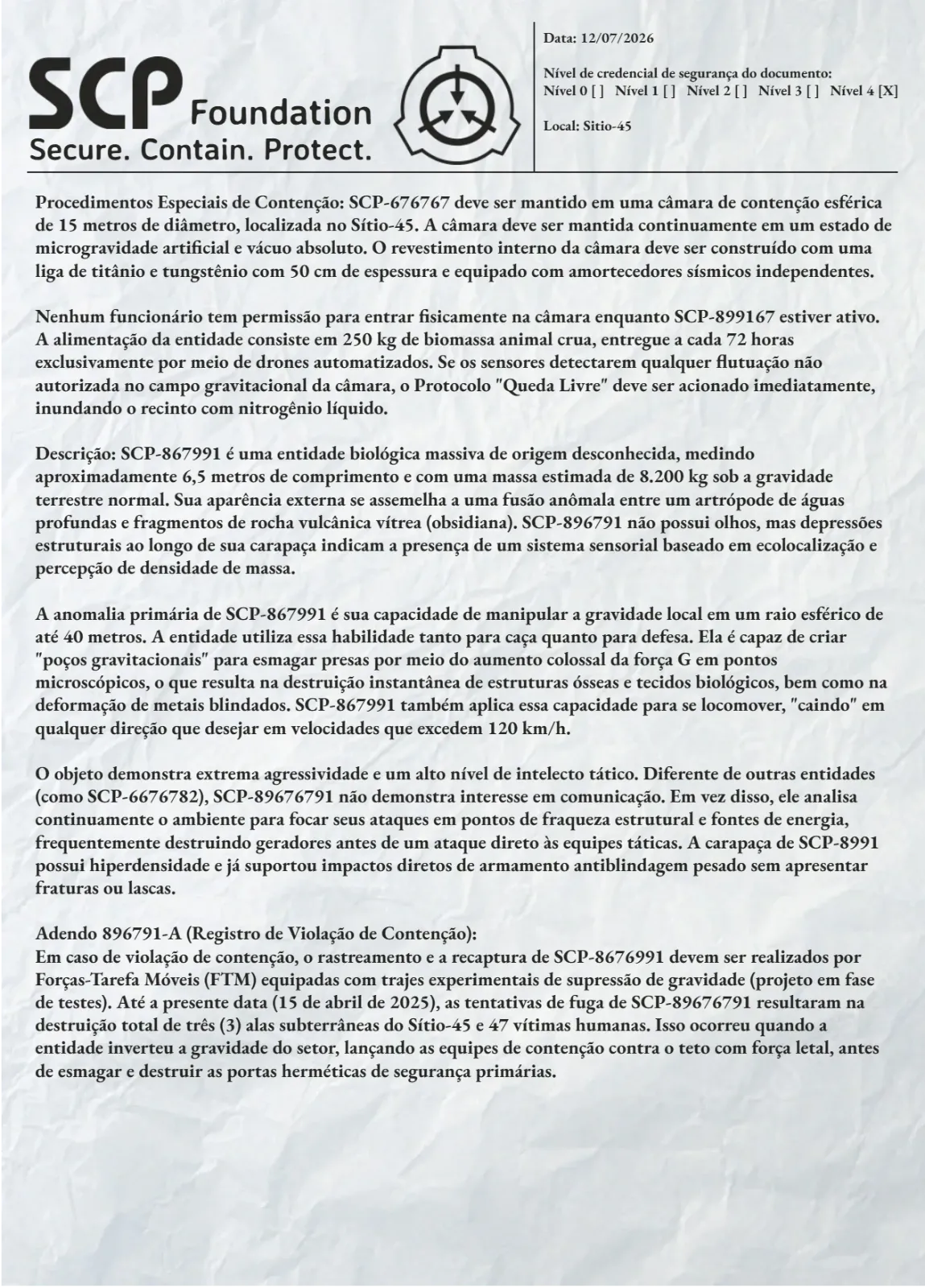
To prepare an SCP report for a tabletop RPG, first decide what players can do after reading it. Checking a log, finding a researcher or testing an observation gives the document a purpose. Then adapt ERPG’s Relatório da Fundação template around that discovery.
The template is marked free at the September 15, 2026 review. Its project combines text and images with SCP Foundation references. Check its page for current availability. To compare this format with a credential, see the SCP handouts guide.
1. Decide which information players receive
A file presented at the start of a session can establish the mission. A document found during exploration can challenge that mission. Write one sentence in your notes: “this report reveals who inspected the storeroom after evacuation.” Use it to decide what belongs in the player version.
Establish the source too: who wrote it, when, and based on which observation? A researcher can record a fact accurately while misinterpreting its cause. That distinction creates a mystery while leaving useful information available.
2. Organize the wording before opening the editor
The SCP Wiki’s writing guide presents identification, class, containment procedures, description and optional addenda. For a session handout, select the parts characters need to consult. Adapt ERPG’s visual template to your chosen text; do not assume every section already has a dedicated field.
| Handout section | Question it should answer | | --- | --- | | Identification and date | Which case and revision does this document belong to? | | Procedure | What should the team do or avoid in the fiction? | | Observation | What was recorded, and under which circumstances? | | Responsible person and further record | Who can clarify the incident? |
If you include an object class, choose one that fits the story. In the SCP Wiki’s classification reference, classes concern containment; “Safe” does not guarantee harmless contact. Avoid treating the class as a simple damage rating.
3. Write a clue the party can check
This is original example wording for adaptation, unrelated to a numbered SCP Wiki entry. It is not the text already included in the template.
Campaign record: East Chamber — revision 03 Procedure: keep the viewing panel covered between inspections. Record every opening in the reception log. Observation: at 02:14, the panel showed an empty corridor. At the same minute, the log recorded a maintenance team entering. The corridor clock had stopped during the evacuation. Follow-up: check the terminal’s time and speak to the maintenance supervisor before the next inspection.
The passage offers two sources to compare: the log and the terminal. Its contradiction can be investigated. Decide in your game master notes which clock was correct and what happened. If the phenomenon changes records, define its limits before the players test them.
4. Adapt Relatório da Fundação
Open the template and inspect its available layers. Review the body, headings, credential fields and images you keep. Remove or adapt references that do not belong to the case. An old name left in a heading may look like an intentional clue.
Keep identification and date easy to locate. If the text cannot fit comfortably, shorten the observation or prepare a second delivery. Essential information needs to stay readable when a player enlarges the image on a phone.
Redactions can suggest withheld information in the fiction, but retain a person, place or action the party can investigate. Prepare a separate game master version; answers should not be concealed in layers of the document shared with players.
5. Connect the report to the next scene
An identifier on Cartão SCP can match a record mentioned in the report. The SCP credential guide explains that connection. The card is Premium at this review; a witness can also provide the same lead through narration.
Before the session, check dates, inspect the export and read only the player version: is there a clear piece of information to investigate? For other evidence formats, explore the investigation collection and the RPG handouts page.